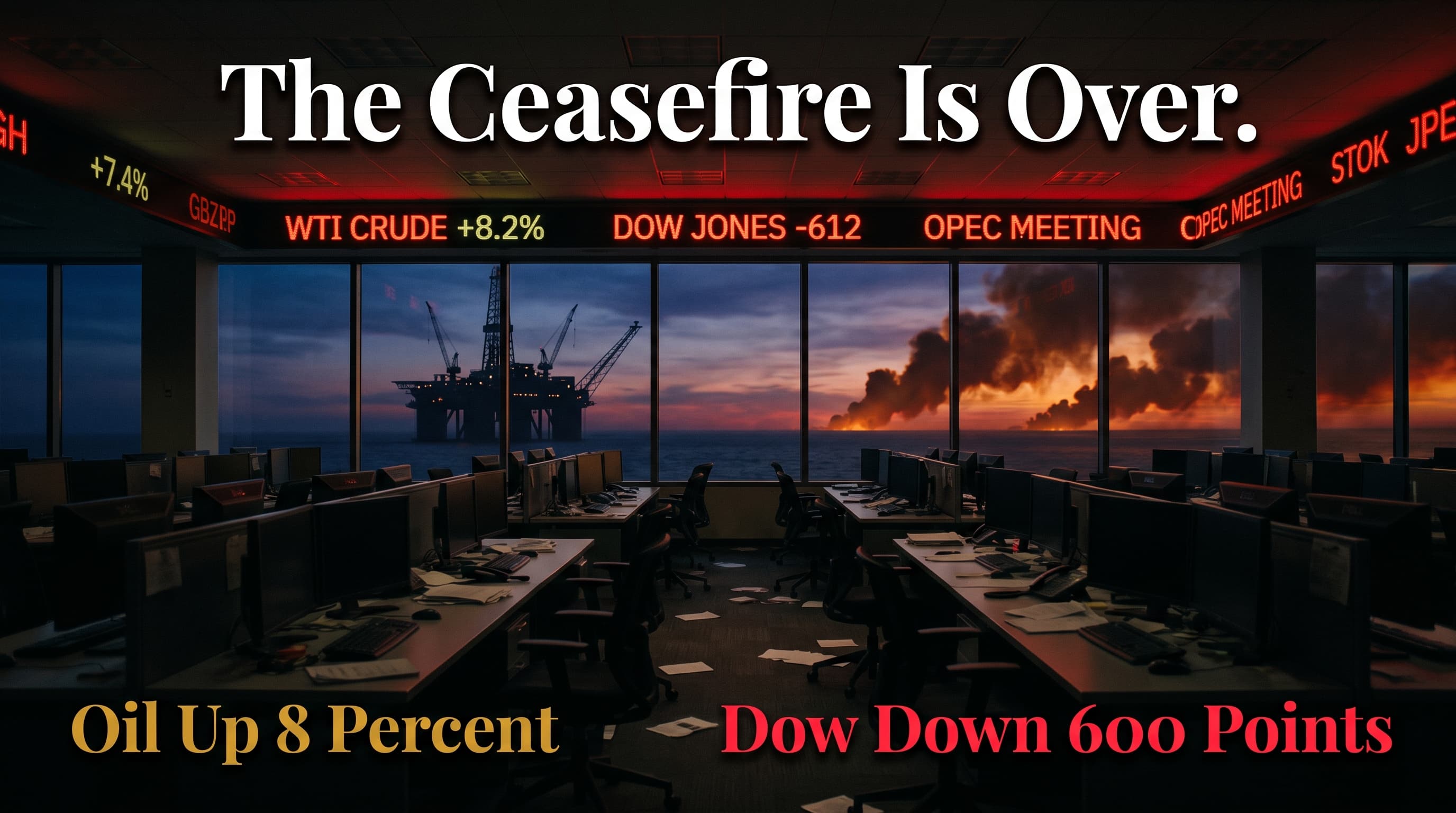
Barely a day after a tanker was struck near the Strait of Hormuz in an incident MorrowReport covered yesterday, the fragile peace between the United States and Iran collapsed entirely. Speaking at a joint news conference with NATO Secretary General Mark Rutte in Ankara, President Trump said plainly that the ceasefire is over. I do not want to deal with them anymore, he said, describing the Iranian government as scum. As far as I am concerned, it is over.
The declaration followed a night of American military action Trump described in blunt terms. We hit them very hard last night, he told reporters, adding that the US would probably hit them hard again tonight, and offering what he called a little warning before doing so. According to reporting cited by the Globe and Mail, US forces struck more than 80 targets inside Iran overnight, including air defense systems, command and control networks, and anti ship missile capabilities, in direct response to attacks this week on three commercial vessels transiting the Strait of Hormuz. The strikes represent by far the largest single US military action against Iran since the Versailles interim agreement was signed on June 18, and they arrived just weeks after that same agreement had already survived one serious breach when Iran hit US bases in Kuwait and Bahrain.
Markets reacted immediately and violently. Oil moved first and moved hardest. West Texas Intermediate crude jumped as much as 7.85 percent intraday, briefly trading near 76 dollars a barrel, before settling closer to 70.44 dollars by the end of the session, a 3 percent gain on the day. Brent crude followed a similar path, spiking above 78 dollars at points during the day, at one stage rising more than 5.7 percent, before closing near 74.16 dollars. The moves mark a sharp reversal from where oil sat just 24 hours earlier, when the market had barely reacted to the tanker attack itself because a supply glut from OPEC and the Gulf had grown deep enough to absorb that shock. A direct presidential declaration that the ceasefire is finished proved to be a different kind of shock entirely.
Equities fell across the board. The Dow Jones Industrial Average dropped more than 600 points at its intraday low, a decline of roughly 1.1 percent, before paring some of that loss as the session wore on, ultimately closing down somewhere between 460 and 540 points depending on the exact print. The S&P 500 fell between half a percent and two thirds of a percent, and the Nasdaq Composite swung between small gains and modest losses as investors weighed the geopolitical shock against still resilient corporate earnings expectations. Energy producers were the one clear group of winners, with Chevron and ExxonMobil both rising more than 3 percent as higher crude prices flowed straight through to their outlook. Chipmakers, by contrast, extended a rough stretch that began with a disappointing earnings report from Samsung Electronics on Tuesday, adding a second source of pressure to an already jittery tech sector.


