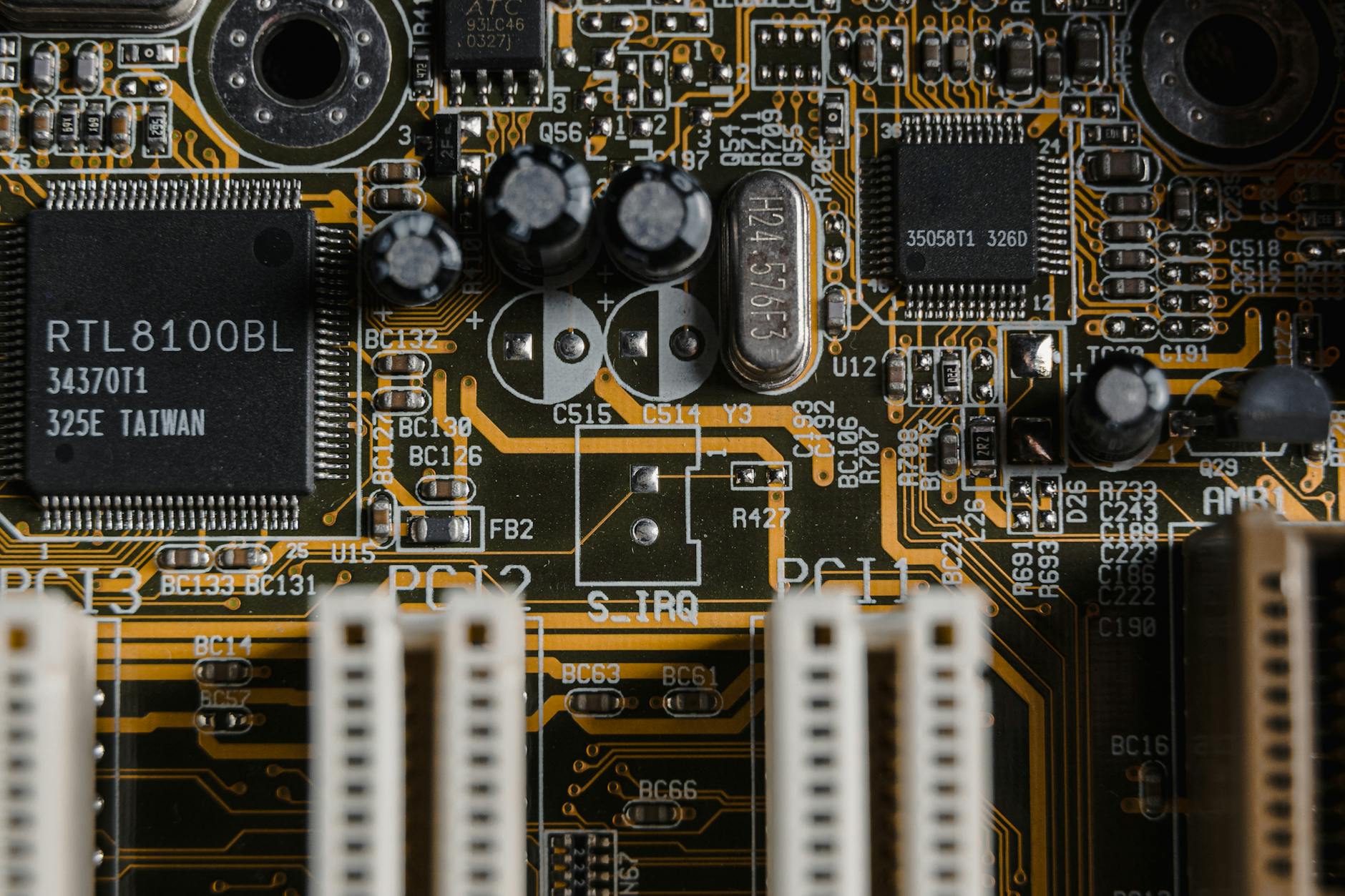
Washington Tightens Chip Exports as Taiwan, Seoul, Tokyo Scramble to Redirect Supply
The US has escalated semiconductor export controls targeting Chinese manufacturers, forcing a historic realignment of supply chains across East Asia. Western consumers and tech companies face higher costs and delayed product launches as geopolitical competition reshapes global chip architecture.
By MorrowReport Editorial Team
Tuesday, May 12, 20266 min read1,256 words
Washington imposed new restrictions on advanced semiconductor exports to China last month, targeting 140 Chinese chip design and manufacturing companies and cutting off access to critical US manufacturing equipment. The move threatens $15 billion in annual semiconductor trade flowing through Taiwan, South Korea, and Japan—a supply chain reconfiguration that will ripple through Western consumer electronics, automotive, and defence sectors within six months.
**Key Facts**
• US semiconductor exports to China fell 64% year-over-year in Q3 2024, with advanced chip equipment shipments dropping from $2.1 billion (2023) to $0.75 billion (2024)
• Taiwan's chip export value at risk: $12.4 billion annually; South Korea's: $4.2 billion; Japan's: $3.1 billion combined across affected manufacturers and suppliers
• Last comparable export control regime: 1989 CoCom restrictions on Soviet technology, which created 18-month supply disruptions and triggered allied nation workarounds that persisted through 1995
• At current pace of escalation, Western consumer electronics prices will rise 8-12% by Q2 2025 if supply chain alternatives don't materialise within 90 days
**Background**
The US Department of Commerce has methodically tightened the semiconductor export noose since October 2022, but this month's action represents the most aggressive targeting of Chinese companies outside the Huawei sanctions package. The controls restrict sale of chips containing US technology—even those manufactured abroad—where performance exceeds specific thresholds. Taiwan's TSMC and South Korea's Samsung, the world's dominant chip manufacturers, both hold non-Chinese customer bases that depend on US-origin fabrication equipment. Japan supplies 45% of the specialty materials that make advanced chip production possible. Beijing's response has accelerated domestic chip development spending to $150 billion over five years, but Chinese manufacturers still lag US and allied competitors by 3-5 technology nodes.
**The Supply Chain Realignment Has Already Begun**
Taiwan's chip makers are quietly shifting capacity allocation away from customers with Chinese exposure, redirecting production toward American and European buyers willing to pay premium pricing. TSMC signalled this shift in its October earnings call when executives noted "increased complexity in customer qualification across multiple geographies." That corporate language masks the reality: Taiwanese foundries are rationing advanced nodes and writing new supply contracts with geographic restrictions baked in.
South Korea's Samsung and SK Hynix face a different pressure. They export both to Chinese manufacturers and to US-allied markets. The controls create a binary choice: lose Chinese revenue or face potential secondary sanctions preventing them from buying US equipment. Lee Jae-yong, SK Hynix's executive chair, told analysts in a recent earnings call that "geopolitical supply chain management has become a core business function," acknowledging that his company now allocates engineering resources to compliance with US export rules rather than pure manufacturing optimization.
Japan's role is under-appreciated in Western analysis. Japanese companies control the materials, chemical supplies, and precision manufacturing tools that make chips possible. Shin-Etsu Chemical, Tokyo Electron, and Nikon supply equipment and materials where alternatives barely exist. Tokyo has aligned with Washington on export controls, but Japanese executives worry openly about retaliatory Chinese restrictions on rare earth materials and advanced ceramics where China holds dominant positions. "Japan is stuck in the middle of an escalation it did not create," according to Toru Kano, senior fellow at the Nikkei Asian Review and analyst of Japanese trade policy. "Our government supports US strategy, but our companies will bear the cost of supply chain fragmentation."
The counter-narrative comes from Beijing and a handful of Western analysts who argue the controls will backfire. The Brookings Institution's China economics program published research in November 2024 arguing that "aggressive US restrictions accelerate Chinese self-sufficiency and reduce future US market access" rather than constraining Chinese capabilities. Beijing has launched subsidised alternative chip foundries and is offering preferential access to state contracts for manufacturers willing to reduce US supply dependence. This creates a perverse incentive: Chinese companies will build backward-integrated supply chains that systematically exclude US technology, reducing American leverage over time.
**The Western Consumer Impact Arrives Faster Than Policy Makers Expect**
Three factors compress the timeline. First, advanced chip demand is rising as AI accelerates compute requirements. Second, Taiwan and South Korea cannot instantly build new capacity; fabrication plants require 18-36 months from groundbreaking to first production. Third, inventory buffers are thinning. Customers who pre-positioned chips ahead of the October controls are now consuming those stocks, and reordering into a constrained market.
Western electronics makers are already reporting longer lead times. Consumer GPU prices rose 4-7% in November 2024 as supply tightened. Smartphone manufacturers are experiencing 2-3 week delays on cutting-edge processors. Automotive companies dependent on advanced semiconductors for autonomous driving systems are negotiating premium pricing or accepting longer delivery windows. A Western smartphone maker paying $45 per advanced chip in 2023 now pays $52-58 for the same performance tier. Multiply that across 200 million units annually, and the cost impact reaches $1.6-2.4 billion per major manufacturer.
**What To Watch: Three Indicators**
TSMC's advanced node (5nm and below) capacity utilisation will be the first canary in the coal mine. Watch for their quarterly capacity announcements in February 2025; if utilisation climbs above 95% while average selling prices remain flat, it signals demand exceeding supply and price pressure building in downstream markets. Second, monitor Samsung's customer concentration metrics in earnings reports; if Chinese-origin revenue drops below 8% of their semiconductor division revenue (currently 12%), it confirms the supply reallocation is structural, not temporary. Third, track Japanese material export prices through Tokyo's trade ministry data; if specialty chemical and gas prices for chip manufacturing rise more than 15% quarter-over-quarter, it signals Japanese suppliers are recapturing margin lost to volume shifts—a signal that supply constraints are broadening beyond Taiwan and South Korea.
**How Will US Export Controls Affect Semiconductor Prices in 2025?**
Chip prices will rise 8-15% depending on product tier, with advanced processors (5nm and below) facing larger increases than mature nodes. Companies with diversified supply sources will absorb costs; those dependent on single suppliers face delays or allocation cuts. By mid-2025, we expect consumer electronics pricing to reflect supply constraints through higher retail prices for AI-capable devices, premium smartphones, and gaming equipment. Mature-node shortages will also crimp automotive production, extending vehicle delivery times and supporting higher prices through scarcity.
**5 Ways US-China Chip Tensions Are Already Hitting Western Wallets**
Consumer electronics will cost 5-10% more by spring 2025. Automotive repairs and new-vehicle purchases will face delayed parts availability. Gaming console and PC pricing will climb. Cloud computing costs will rise as data centre operators pay premium prices for server chips. Insurance and financial services will absorb costs from infrastructure upgrades delayed by chip supply constraints. Every sector reliant on semiconductors faces compressed margins or higher consumer prices.
Data visualization context
**Frequently Asked Questions**
**Q: Will Taiwan's chip makers lose revenue from these controls?**
A: TSMC and other Taiwanese foundries will lose Chinese customer revenue initially—perhaps $2-3 billion annually—but will redirect capacity to higher-margin American and European customers at premium pricing, partially offsetting losses. However, long-term competitiveness risks emerging if Chinese companies successfully develop indigenous alternatives using non-US technologies.
**Q: Can Japan increase material supplies to compensate for lower Chinese demand?**
A: Japanese material suppliers lack sufficient capacity to absorb displaced Chinese orders in the near term, but are investing aggressively in new facilities. Expect 12-18 months before meaningful capacity additions come online, during which supply constraints will persist.
**Q: What happens if China retaliates against Japan or South Korea?**
A: Beijing controls 70% of rare earth element refining and significant shares of advanced ceramic production used in chip manufacturing. A Chinese export restriction on these materials would create cascading supply shortages across Taiwan and South Korea, potentially forcing US-allied governments to negotiate on controls scope.