This HSA Trick Can Save Americans $4,300 Tax-Free in 2026 — Before the Deadline Passes
Health Savings Accounts offer the only "triple tax advantage" available to Americans — contributions are tax-deductible, growth is tax-free, and withdrawals for medical expenses avoid taxes entirely. If you have an eligible high-deductible health plan, you can contribute up to $4,300 (individual) or $8,550 (family) in 2026 and slash your tax bill immediately.
You can contribute $4,300 to a Health Savings Account (HSA) in 2026 if you have individual coverage under a qualifying high-deductible health plan (HDHP), or $8,550 if you have family coverage — and every dollar reduces your taxable income, grows tax-free, and can be withdrawn tax-free for qualified medical expenses. This is the only savings vehicle in America that offers this "triple tax advantage," yet 72% of eligible workers fail to maximize their HSA contributions. If you're between 28 and 55, employed or self-employed with an HDHP, and haven't maxed your 2026 HSA, you're leaving thousands on the table before the tax deadline arrives.
How It Works
An HSA is a tax-advantaged savings account designed specifically for people enrolled in a high-deductible health plan. Unlike a Flexible Spending Account (FSA), which forces you to "use it or lose it" each year, an HSA rolls over every dollar you don't spend. You contribute pre-tax dollars (or make tax-deductible contributions if self-employed), invest that money in stocks, bonds, or cash, and withdraw it tax-free for qualified medical expenses at any point in your life.
The 2026 contribution limits are $4,300 for self-only coverage and $8,550 for family coverage. If you're age 55 or older, you can contribute an additional $1,150 "catch-up" contribution, raising the limit to $5,450 (individual) or $9,700 (family). These limits apply to calendar year 2026, and any contribution made by December 31, 2026, counts toward your 2026 limit.
Here's the tax math: If you contribute $4,300 to an HSA and you're in the 24% federal tax bracket (roughly $44,726–$95,375 in taxable income for single filers in 2026), you save $1,032 in federal taxes alone. Add state income tax (average 5% in high-tax states), and your real savings jumps to $1,247 for a single $4,300 contribution. If you earn $85,000 in California, New York, or Massachusetts, your combined tax savings on a maxed HSA is closer to $1,700.
The money you don't spend can remain invested indefinitely. After age 65, you can withdraw HSA funds for any reason without penalty — you'll just owe income tax on non-medical withdrawals, making it function like a traditional IRA. But as long as you use the money for qualifying medical expenses (doctor visits, prescriptions, dental work, mental health care, hearing aids, long-term care insurance premiums, and more), every withdrawal remains tax-free, even after retirement.
Who Qualifies
To contribute to an HSA in 2026, you must meet all three of these criteria:
Covered by a qualifying high-deductible health plan (HDHP): For 2026, an HDHP must have a minimum deductible of $1,550 (individual) or $3,100 (family). Your out-of-pocket maximum cannot exceed $7,750 (individual) or $15,500 (family). Most employer plans and marketplace plans mark whether they qualify; ask your HR department or check your plan documents.
Not covered by any non-HDHP health insurance: You cannot be covered by Medicare, Medicaid, Veterans Administration healthcare, TRICARE, or a spouse's non-HDHP plan. If both spouses have an HDHP family plan, only one HSA is permitted for that family.
Not claimed as a dependent: You cannot be claimed as a dependent on someone else's tax return.
If you enroll in an HDHP on January 1, 2026, you can contribute the full 2026 limit. If you enroll mid-year, your contribution limit is prorated by month — for example, if you enroll on July 1, 2026, your limit is roughly $2,150 (7 months ÷ 12 months × $4,300). If you're already covered by an HDHP in 2026, you're eligible right now.
Here's How to Claim It
Step 1: Verify your HDHP eligibility. Contact your employer's benefits department or log into your health insurance account and search for the phrase "high-deductible health plan" in your plan documents. Confirm your deductible and out-of-pocket maximum match the 2026 HDHP minimums ($1,550/$3,100 and $7,750/$15,500, respectively). If you're on a marketplace plan (Healthcare.gov), the plan details page will indicate HDHP eligibility.
Step 2: Open an HSA if you don't have one. If your employer offers an HSA, enroll through payroll — this allows pre-tax contributions and is the simplest route. If your employer doesn't offer an HSA, or you're self-employed, open one independently at a bank or HSA custodian. Fidelity, Lively, Anthem, and Firstbank all offer HSA accounts with $0 minimum opening balance. Self-employed individuals apply online in 15 minutes; salaried employees typically enroll during open enrollment or within 30 days of HDHP enrollment.
Step 3: Calculate your 2026 contribution room. Determine whether you need individual ($4,300) or family ($8,550) coverage, and whether you qualify for the $1,150 age 55+ catch-up. Subtract any contributions you've already made to your HSA in 2026 from your limit. For example, if you contributed $1,500 via payroll January–May 2026, your remaining room is $2,800.
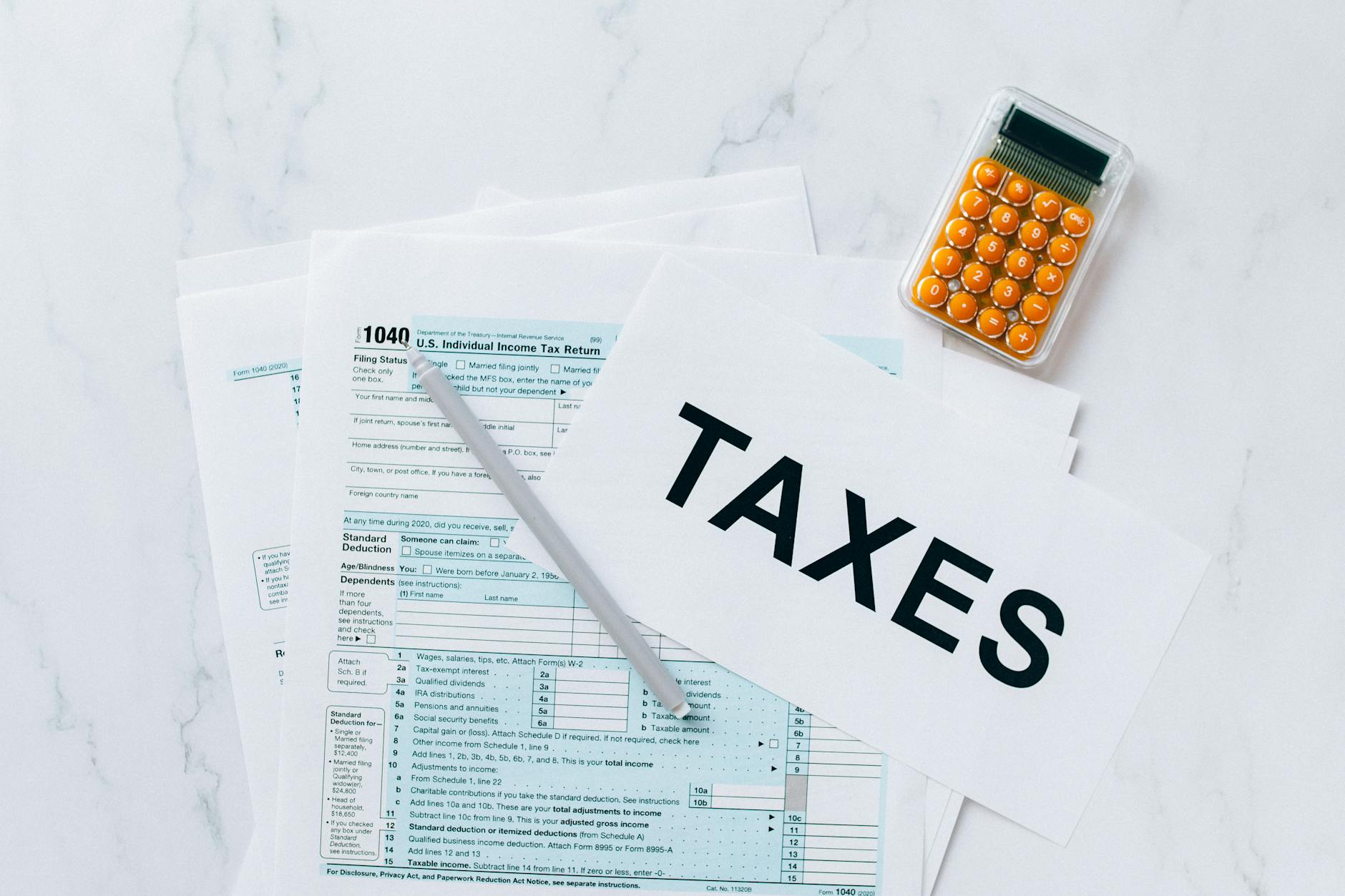
Step 4: Make a lump-sum contribution before December 31, 2026. If you're maxing via payroll, adjust your W-4 or payroll election to increase your HSA withholding for the remaining months of 2026. If making a one-time contribution, log into your HSA account and transfer funds from your bank account. Self-employed individuals can make contributions through December 31 and deduct them as above-the-line deductions on Form 1040 Schedule 1 (line 21) when filing 2026 taxes in 2027.
Step 5: Invest your HSA balance (optional but recommended). Most HSA custodians offer a money market fund, target-date funds, or brokerage options. If you contribute $4,300 early in 2026 and keep it invested in a diversified portfolio averaging 6% annual returns, by age 65 that single contribution grows to $42,000+ tax-free. Don't leave your HSA sitting in a 0.01% savings account — allocate at least 70% to low-cost index funds (like a total stock market fund with a 0.03% expense ratio) if you won't need the money for 10+ years.
Real-World Example
Marcus, 44, is a marketing manager earning $68,000 per year in Texas. His employer offers a HDHP with a $2,000 individual deductible and $6,500 out-of-pocket maximum — both qualify as HDHP minimums. He hasn't made any HSA contributions in 2026. Marcus opens an HSA at Fidelity and contributes $4,300 on December 1, 2026. Because Texas has no state income tax, he saves $4,300 × 24% (his federal tax bracket) = $1,032 in federal taxes. He invests the $4,300 in a target-date 2045 fund and doesn't touch it. In 15 years (by age 59), assuming 6% annual growth, that $4,300 becomes $10,300 — all tax-free. When he needs a root canal in year 3 (costing $1,200), he withdraws $1,200 tax-free from his HSA. His remaining balance continues growing.
The Deadline
You can contribute to your 2026 HSA until December 31, 2026 — that's the hard cutoff. Unlike a 401(k) (which has a different deadline for employer contributions), HSA individual contributions made by December 31, 2026, count toward your 2026 limit. If you file your 2026 taxes in April 2027, you can also file an amended return (Form 1040-X) to claim an HSA contribution you make between January 1 and April 15, 2027 (for an April 15 deadline extension), but this is complicated and not recommended — contribute before year-end instead.
If you're currently enrolled in an HDHP but haven't maxed your 2026 HSA contribution, you have roughly 8 months remaining (until December 31, 2026) to deposit the full amount. Each month you delay costs you tax savings and lost investment growth. A $4,300 contribution made today (mid-May 2026) will grow more than the same contribution made in November 2026.