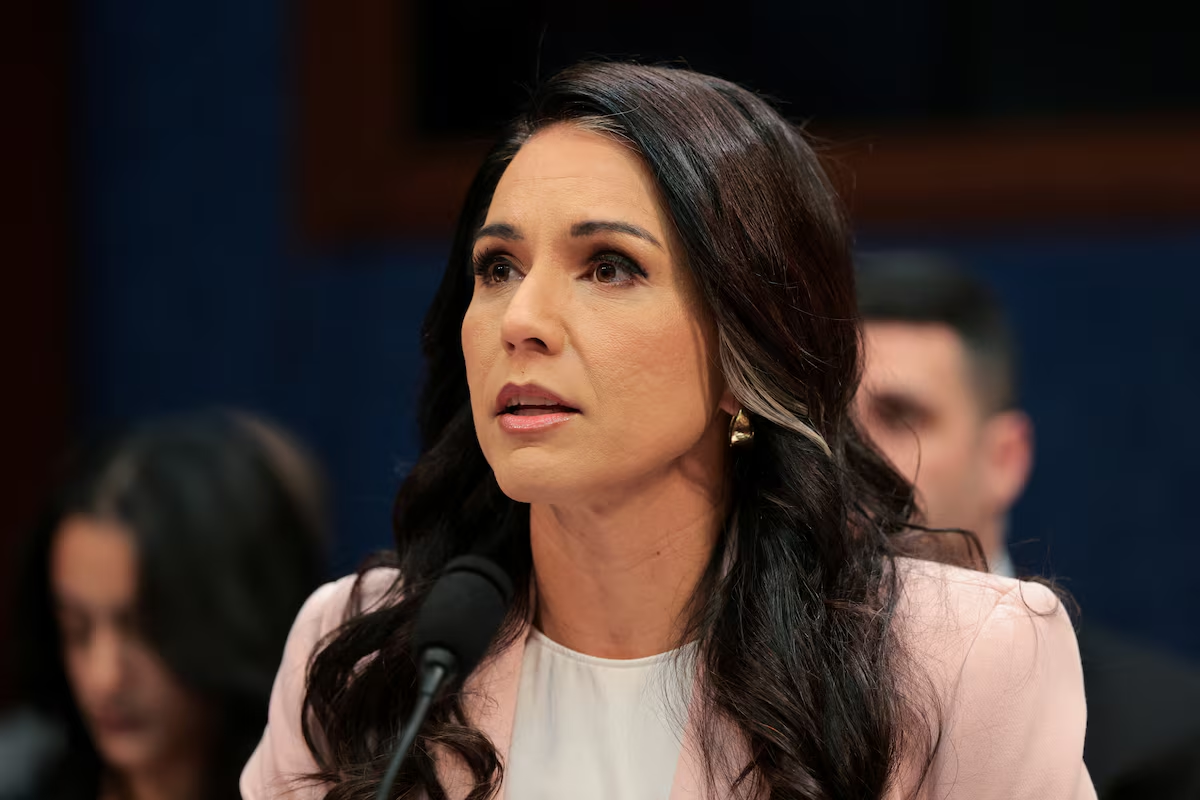
Gabbard Steps Down from Director of National Intelligence Post
Tulsi Gabbard has resigned as President Donald Trump's Director of National Intelligence, marking a significant personnel shift within the incoming administration's intelligence apparatus. The resignation, which has come to light in the past 24 hours, represents one of the most consequential staffing changes since Trump announced his cabinet selections following the 2024 election.
Gabbard submitted her resignation letter this week, citing personal and family considerations as her primary reason for stepping aside from the role. The departure comes as the former Hawaii congresswoman and 2020 presidential candidate faced intensifying scrutiny from lawmakers and intelligence community veterans regarding her past statements on foreign policy matters and her prior criticism of U.S. intelligence agencies.
Timing and Context of Resignation
The timing of Gabbard's departure is particularly significant given that she has not yet been formally confirmed by the Senate. As of this morning, sources within the intelligence community and on Capitol Hill have confirmed that discussions surrounding her suitability for the position had grown increasingly contentious. The resignation effectively circumvents what many observers believed would have been a contentious confirmation process, potentially preventing a protracted Senate debate.
Gabbard's nomination has been one of the more controversial selections within Trump's cabinet lineup. Her past comments criticizing U.S. military interventions, her stated skepticism of certain intelligence assessments, and her previous diplomatic outreach to Syrian President Bashar al-Assad had drawn particular concern from both Democratic and Republican intelligence committee members. Several former intelligence officials have publicly questioned whether her worldview aligns with the institutional requirements of leading the 18-member intelligence community.
Key Points of Contention
Previous statements questioning the veracity of certain intelligence assessments regarding Middle Eastern conflicts
Vocal criticism of U.S. intelligence agencies' foreign policy recommendations during her congressional tenure
Concerns raised by career intelligence professionals about her approach to Russia and China policy
Questions regarding her statements made during diplomatic visits to Damascus in 2017
Intelligence Community Response
The resignation has has elicited mixed reactions from across Washington and the intelligence establishment. Some career intelligence officials have expressed relief that a contentious confirmation battle has been averted, while others within the intelligence community have signaled concern about the broader direction of intelligence leadership under the Trump administration.
In recent days, several former directors of national intelligence from both Republican and Democratic administrations have issued public statements regarding the importance of intelligence agency independence and institutional credibility. These statements, while not directly naming Gabbard, have underscored ongoing concerns about political influence over intelligence assessments and analysis.
The departure has also raised questions about succession planning within the intelligence community. The DNI position oversees seventeen intelligence agencies and serves as the principal intelligence advisor to the President. Finding a replacement who commands broad support across both intelligence professionals and Congress will present a significant challenge for the Trump administration as it seeks to staff key national security positions.
Political Ramifications
Gabbard's resignation averts what would have likely become a defining confirmation battle for Trump's intelligence priorities. Senate Intelligence Committee members from both parties have indicated in recent weeks that they had substantial questions they intended to pose during any confirmation hearing. The withdrawal of her nomination eliminates this potential flashpoint and allows the administration to move forward with alternative candidates.
Democratic senators have issued statements in the past 24 hours suggesting they viewed the resignation as validation of their concerns. Republican senators have taken a more muted approach, with several noting that they respect Gabbard's personal decision while maintaining that the administration should move quickly to nominate a replacement who can be confirmed without significant controversy.
Gabbard's Statement and Next Steps
In her resignation letter, Gabbard has stated that she believes it is in the best interest of the country and her family to step aside from the nomination. She has expressed her continued commitment to national security issues, though she has not specified what her next role or position might entail. Sources close to Gabbard have indicated that she may remain engaged with foreign policy matters in some capacity, though details remain unclear as of this writing.
The Trump transition team has indicated that the administration will move expeditiously to identify alternative candidates for the DNI position. Several names have circulated in Washington circles as potential replacements, including current and former intelligence officials with broader consensus support within the intelligence community and Congress.
What Happens Next
Trump administration will likely announce a replacement candidate within days
Senate Intelligence Committee will need to schedule confirmation hearings for new nominee
Intelligence community will await clarity on administration's strategic intelligence priorities
Ongoing questions remain about DNI office independence and analytical integrity
Broader Context: Intelligence Leadership Challenges
This resignation highlights enduring tensions between executive branch intelligence priorities and the institutional independence of the intelligence community. The DNI position, created in 2004 following the 9/11 Commission recommendations, was designed to coordinate intelligence analysis across multiple agencies while maintaining analytical integrity and independence from political pressure.
The departure of Gabbard, who has been viewed by many intelligence professionals as potentially compromising that independence, has been welcomed by some career intelligence officers who have expressed concerns about politicization of intelligence analysis. However, the broader question of how intelligence agencies should balance responsiveness to executive priorities with institutional independence remains unresolved.
In recent discussions with current intelligence officials this week, sources have indicated ongoing concern about the direction of intelligence policy under the new administration. Several have noted that maintaining public trust in intelligence assessments requires demonstrated independence from partisan political considerations.
Financial and Market Implications
While primarily a political and national security matter, Gabbard's resignation has had subtle effects on financial markets and defense sector stocks. In the past 24 hours, some defense and intelligence contractors have seen modest trading volatility as investors assess the implications of changed intelligence leadership. The stability in intelligence community leadership is viewed by some market analysts as important for continuity in defense contracting and national security spending priorities.
The uncertainty surrounding intelligence leadership succession may also have minor impacts on the defense sector's medium-term planning, as contractors typically prefer stable relationships with intelligence agencies and clear policy direction from the intelligence community leadership.
Looking Forward
As the Trump administration moves forward with identifying Gabbard's successor, the broader question of intelligence agency independence and politicization of intelligence will likely continue to dominate discussion among policymakers, career intelligence professionals, and Congress. The resignation, while resolving one immediate controversy, leaves unresolved questions about the administration's approach to intelligence community governance and the balance between executive priorities and institutional integrity.
The coming days will likely see formal announcements regarding replacement candidates and renewed debate about the appropriate relationship between political leadership and intelligence professionals. For now, the intelligence community enters a period of transition and uncertainty as it awaits new leadership and clarity on the administration's intelligence priorities and strategy.