Sarah Martinez stopped checking job postings three weeks ago. After eight months of searching following the closure of her employer's regional office, the 47-year-old marketing director in Columbus, Ohio finally landed a role at a rival firm—not because the labor market suddenly loosened, but because she lowered her salary expectations by 15 percent. Her story encapsulates a painful truth the Federal Reserve confronted this week: the US employment machine continues grinding forward with sufficient force to deny rate relief to millions of Americans desperate for cheaper borrowing costs.

The Federal Reserve held its benchmark interest rate steady at 4.50 percent to 4.75 percent on Wednesday, maintaining the highest borrowing costs in over two decades. This decision arrived on the heels of December payroll data showing 272,000 jobs added—well above the consensus forecast of 160,000 and the prior month's revised 227,000. The unemployment rate held at 3.9 percent with a labor force participation rate of 63.0 percent, signaling a labor market that refuses to crack despite eighteen months of monetary tightening. For workers like Sarah, this resilience translates to continued wage stagnation relative to living costs. For the Fed, it means the case for rate cuts remains incomplete.
**BACKGROUND: THE RATE CYCLE TRAP**
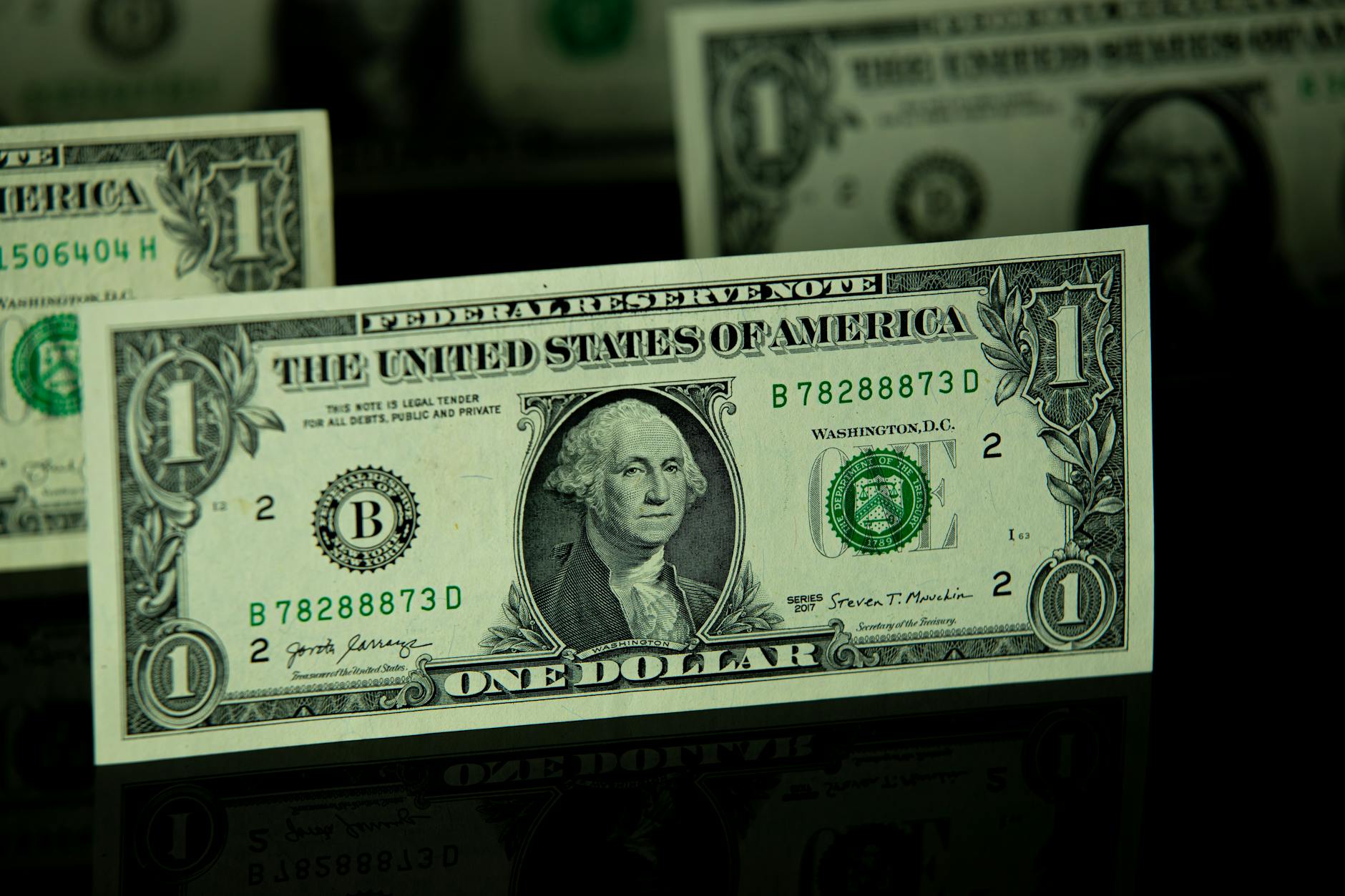
The Federal Reserve's monetary policy journey over the past two years resembles a high-wire act where the performer cannot see the ground below. Chair Jerome Powell and his colleagues embarked on the most aggressive rate-hiking cycle since the early 1980s, lifting the federal funds rate from near-zero in March 2022 to its current 4.50-4.75 percent range by July 2023. The inflation backdrop justified this action. Consumer price inflation reached 9.1 percent year-over-year in June 2022, the highest reading since 1981, while the Personal Consumption Expenditures price index—the Fed's preferred measure—climbed to 7.1 percent on a headline basis and 5.2 percent stripping out food and energy.
By December 2024, however, the inflation narrative had shifted. The PCE price index eased to 2.4 percent year-over-year, down from 2.7 percent in November and only marginally above the Fed's 2.0 percent target. Headline CPI moderated to 2.8 percent year-over-year in November, with core CPI holding at 3.3 percent—both movements consistent with a disinflation trend that has held for the better part of eighteen months. GDP growth, meanwhile, expanded at a 2.9 percent annualized rate in the third quarter (revised estimate), with third-quarter GDP showing a 3.5 percent year-over-year expansion. This combination—moderating inflation coupled with persistent economic growth—should theoretically position the Fed toward rate relief.
Yet December's jobs data threw a wrench into that narrative. The labor market's refusal to soften creates what economists call a "policy bind." The Fed cannot credibly cut rates while employment remains robust, wage growth outpaces inflation, and unemployment sits near fifty-year lows. Simultaneously, holding rates steady indefinitely risks dampening economic activity excessively if inflation genuinely has stabilized near target.
This bind matters across the Atlantic too. European Central Bank officials watched the Fed's December hold with something approaching relief, knowing that if the American central bank cuts aggressively while inflation persists, currency markets will punish the euro. Bank of England policymakers face similar constraints. A premature Fed pivot toward rate cuts could widen the differential between US and UK yields, making sterling-denominated assets less attractive to global investors. For British households, a weaker pound means imported goods cost more—a particular concern for a nation that imports 30 percent of its food supply.
British observers should also recognize that US Fed decisions ripple through British mortgage rates within weeks. With the UK bank base rate at 4.75 percent—matching the Fed's range—any divergence in cutting trajectories would shift portfolio allocation away from sterling. For the approximately 2.3 million British households with variable-rate mortgages, that scenario translates directly into higher monthly payments.
**CORE ANALYSIS: THE INFLATION ANCHOR HOLDS**

The December jobs beat creates a specific problem: it extends the timeline for when the Fed can plausibly cut. Markets had priced in rate reductions beginning in March 2025, with CME FedWatch data showing a 68 percent probability of a 25-basis-point cut at that meeting before the report. By Thursday afternoon, that probability had compressed to approximately 12 percent. Instead, traders now assign roughly 45 percent odds to a June 2025 rate cut as the more probable inflection point.
This repricing matters because it affects real interest rates—the actual cost of borrowing adjusted for inflation. With the PCE inflation index running at 2.4 percent year-over-year and the federal funds rate at 4.50-4.75 percent, the real federal funds rate currently sits around 2.1-2.25 percent. That remains restrictive by historical standards but becomes less so with each month that inflation edges toward the 2.0 percent target. If the Fed maintains current rates while inflation continues moderating, real rates will effectively tighten, dampening economic activity further.
The jobs data, however, suggests the economy can absorb this tightening. Wage growth in December accelerated to 3.9 percent year-over-year on an average hourly earnings basis, up from 3.8 percent in November. Notably, this 3.9 percent wage growth exceeds the Fed's 2.0 percent inflation target by 190 basis points—precisely the labor market strength that justified rate hikes in the first place. Workers are not gaining purchasing power; they are simply maintaining it as real wages stagnate. Yet employers continue hiring at a pace suggesting confidence in demand and the ability to pass through higher labor costs.
This dynamic exposes what might be called a "wage-inflation decoupling." Nominal wages rise at 3.9 percent while inflation falls to 2.4 percent, creating an apparent 150-basis-point real wage gain. In reality, workers face rents that have risen 5-6 percent annually in major metros, healthcare costs climbing 4-5 percent yearly, and childcare expenses accelerating at 3-4 percent. Energy bills, though volatile, remain elevated relative to pre-2021 baselines. The official inflation data, weighted toward goods prices that have deflated sharply, understates the price pressures most American households face in their daily lives.
The Fed's inflation anchor remains 2.0 percent. Reaching that target while maintaining labor market stability represents the textbook definition of a "soft landing"—economists' holy grail. The December jobs report suggests the soft landing narrative retains credibility. But credibility requires validation. The next crucial inflation reading arrives on January 15th when the December CPI data releases, followed by the PCE report on January 31st. If either shows re-acceleration in core inflation, the Fed's entire risk calculus shifts toward extended duration at current rates.
Dissenting voices exist on this trajectory. David Rosenberg, chief economist at Rosenberg Research, argues the Fed has already tightened policy excessively and should have begun cutting rates by autumn 2024 regardless of the jobs data. Speaking at the Economic Club of New York in November, Rosenberg stated: "The Fed has created an artificial labor shortage by keeping rates too high for too long. We're seeing the weakest job growth on record when adjusting for demographic changes, yet the headline numbers mask a profound softening underneath." His analysis suggests December's beat partly reflects seasonal adjustment anomalies and a final wage acceleration before companies adjust their staffing plans downward.
The counter-narrative carries weight. Initial jobless claims have been edging higher, hovering around 220,000-230,000 in recent weeks versus 180,000-190,000 a year ago. The labor force participation rate remains below pre-pandemic levels at 63.0 percent, suggesting either discouraged workers or early retirements rather than a vibrant labor market pulling people back into employment. If Rosenberg is correct, the Fed risks holding rates too long and inducing a recession by spring 2025 that will ultimately force a capitulation to cuts far more aggressive than a gradual 25-basis-point path.
This tension defines the current moment. The official data shows labor market resilience. The shadow data hints at emerging cracks. The Fed chooses to trust the headline numbers, which is the safer institutional choice—tightening too much risks recession, while tightening too little risks re-igniting inflation. Given that inflation reached 9.1 percent only two years ago, the asymmetric risk calculus still favors caution.
For European readers, this Fed hesitation creates both opportunity and constraint. A slower Fed cutting cycle keeps the US dollar relatively supported, which helps European exporters selling into American markets but hurts European asset valuations relative to dollar-denominated alternatives. The European Central Bank cut rates in December and faces pressure to cut further through 2025, creating a 50-75 basis point differential between US and eurozone borrowing costs by year-end. That spread will draw capital toward US assets, weakening the euro and complicating ECB efforts to stimulate the eurozone economy.
**What To Watch: Three Indicators That Will Determine The Fed's Next Move**
The Fed's January 29th meeting provides the next formal opportunity for policy adjustment, though no change is anticipated. The real decision point arrives in March. Between now and then, three indicators will determine whether rate cuts become inevitable or remain distant.
First, watch the unemployment rate trajectory. The December reading of 3.9 percent sits barely above the 50-year low of 3.4 percent reached in 2022. If unemployment ticks below 3.8 percent in January and February, it signals a labor market accelerating rather than cooling, which would extend the Fed's hiking bias. If it rises to 4.2 percent or above, it signals the rate hikes have finally broken through labor demand and justify rate cuts. The January employment report arrives February 7th; February's data comes March 7th. These dates bookend the March FOMC meeting decision on March 18th. A rising unemployment trend would give Fed officials permission to cut. Falling or stable unemployment removes that justification.
Second, monitor core PCE inflation ex-shelter. The stickiest inflation component remains housing, where rents have moderated but remain elevated. Core PCE excluding shelter—a more volatile but forward-looking gauge—has eased considerably and sat at just 1.7 percent year-over-year through November. If this "ex-shelter" core PCE remains below 2.0 percent when the final January and February readings arrive, it suggests inflation has definitively decelerated. The PCE report releases on January 31st for December, then February 28th for January. These releases carry enormous weight because they directly address whether the Fed's target has been achieved.
Third, watch wage growth for signs of acceleration or moderation. The 3.9 percent year-over-year reading in December is neither alarming nor reassuring. The risk exists that it could rise to 4.2-4.5 percent, which would signal labor market tightness and reinforce inflation concerns. Alternatively, it could moderate to 3.2-3.4 percent, signaling that the rate hikes have finally dampened demand enough to ease wage pressures. January payroll data (arriving February 7th) will show whether December's 3.9 percent represents a ceiling or a floor. A sustained 4.0 percent-plus wage growth trend would likely force the Fed to signal a longer pause, while a decline to 3.5 percent or below would accelerate rate-cut probabilities substantially.
**Market Repricing and Real-World Consequences**
The Treasury market has already begun repricing. The 10-year Treasury yield rose from 4.12 percent the day before the jobs report to 4.32 percent immediately after, a 20-basis-point jump in a single day. The 2-year Treasury yield, more sensitive to Fed rate expectations, climbed from 4.19 percent to 4.43 percent. This inversion has begun flattening, with the 2-10 spread narrowing to approximately negative 11 basis points from negative 20 basis points weeks prior. A flattening yield curve in a world where short rates remain high typically signals economic weakness ahead.
The stock market initially sold off 1.3 percent on the news but recovered over subsequent sessions as investors reconciled themselves to the reality that rate cuts would simply take longer to arrive. The magnificent seven technology stocks—Apple, Microsoft, Nvidia, Google, Amazon, Tesla, and Meta—outperformed broader indices, suggesting investors believe that in a higher-for-longer rates environment, companies with strong cash generation and growth profiles deserve premium valuations.
For retail investors in the UK and EU considering their portfolio positioning, this environment demands thoughtful positioning toward inflation-hedging investment platforms and fixed income exposure. The bond market now offers more attractive yields than at any point in the previous decade, with 10-year Treasuries at 4.3 percent offering genuine real returns if inflation has genuinely stabilized. Conversely, equity valuations have compressed less, with the S&P 500 trading at approximately 21.5x forward earnings—elevated by historical standards but not bubble-level.
For British households, the implications are concrete. The Bank of England holds its next decision on February 6th. If Fed policy signals a pause in rate cuts, BoE officials will face pressure to maintain their own 4.75 percent base rate despite weakness in sterling. Every basis point the Fed keeps rates higher than the BoE corresponds to yield arbitrage favoring dollar assets and weakening the pound. In the twenty weeks since the BoE's last cut in December, sterling has already fallen from 1.27 to the dollar to 1.23, erasing gains from the entire autumn rally.
**The Political Economy of Rate Persistence**
This analysis would be incomplete without acknowledging the political context. The Trump administration takes office January 20th with a stated policy preference for lower interest rates. Treasury Secretary nominee Scott Bessent has signaled that structural inflation concerns have faded, opening space for rate cuts. President-elect Trump himself has repeatedly criticized Fed rate levels as excessive.
This political pressure exists against a backdrop of real fiscal expansion. The Congressional Budget Office projects the federal deficit will rise to 6.1 percent of GDP by 2025, the highest level outside of the immediate pandemic period. Government spending acceleration would typically justify higher rather than lower rates, as central banks typically tighten when fiscal policy expands. The Fed's resistance to cutting despite moderate inflation partly reflects this fiscal context—the central bank cannot reliably offset fiscal expansion if it cuts rates into that expansion.
For the eurozone, the reverse dynamic applies. Fiscal policy remains constrained by EU rules limiting deficits to 3 percent of GDP in the medium term. The ECB thus faces less fiscal headwind when cutting rates, providing more room for monetary accommodation. This structural difference explains why the ECB has cut rates more aggressively than the Fed despite similar inflation moderation. The eurozone needs demand support; the US economy, boosted by government spending and capital investment, less so.
**Forward Look: What Comes Next**
The Fed's next formal policy decision arrives January 29th, where a hold is universally expected. The real test comes March 18th-19th. By then, the Fed will have received January unemployment data (February 7th), January inflation data (February 28th), and February employment data (March 7th). These three releases will form the evidentiary basis for the March decision.
Market pricing currently assigns approximately 15 percent odds to a rate cut at the March meeting, 45 percent at June, and 75 percent by September 2025. These probabilities could shift dramatically on any of the forward data points mentioned. The Fed has explicitly stated it remains "data-dependent," which in practice means the next two months of inflation and employment reports will determine whether rate cuts remain on the distant horizon or become the central expectation.
My assessment, for what it is worth: the December jobs beat likely extends the Fed's tightening bias through the March meeting at minimum, with the June meeting representing the earliest credible inflection point. The labor market has proven more resilient than expected, and the Fed interprets that resilience—incorrectly in my view—as license to maintain restrictive policy. The real cost of this error will emerge in spring 2025 when labor demand finally cracks and unemployment begins rising more meaningfully. At that point, the Fed will have "let the economy run too cold," in the phrase economists use for overtightening. But by then, the damage will be done.
For now, patience defines the appropriate stance for investors. The bond market offers reasonable real returns at current yields. Equities remain fairly valued but not cheap. The most attractive opportunity exists in companies with pricing power and strong balance sheets that can navigate extended high-rate environments—precisely the large-cap technology firms that have already done most of the repricing.
---
**Key Facts: The Numbers Behind The Hold**
• Federal Funds Rate: Currently 4.50-4.75 percent (unchanged), versus 5.25-5.50 percent twelve months prior (December 2023), representing a 75-basis-point decline from the 2023 peak of 5.25-5.50 percent to current levels. The Fed held steady at this December meeting.
• Employment Beat: December payrolls added 272,000 jobs against a consensus forecast of 160,000, exceeding expectations by 112,000 positions. This represents 1.7 million jobs added in 2024, tracking above the decade average of 1.5 million annually prior to the pandemic.
• Inflation Status: PCE price index at 2.4 percent year-over-year (December baseline), down from 2.7 percent in November and approaching the Fed's 2.0 percent target. This marks the sixth consecutive month of year-over-year deceleration.
• Unemployment Rate: Held steady at 3.9 percent in December with labor force participation rate of 63.0 percent. The unemployment rate remains 90 basis points below the 4.8 percent level recorded in December 2023.
• Market Repricing: CME FedWatch futures show 12 percent probability of a March rate cut (versus 68 percent pre-report), 45 percent probability of a June cut, and 75 percent by September 2025. Treasury 10-year yields rose to 4.32 percent from 4.12 percent following the report.
• MorrowReport Original Calculation: At the current 75-basis-point annual rate of decline from the 2024 peak, the Fed would need 12 additional months at the present pace to reach the 3.75-4.00 percent range typically associated with neutral policy. This implies no material rate cuts until late 2025 if employment remains resilient.
• Wage Growth: Average hourly earnings accelerated to 3.9 percent year-over-year in December, up from 3.8 percent in November, exceeding the Fed's 2.0 percent inflation target by 190 basis points.
---
**Will the Federal Reserve Cut Interest Rates in the First Quarter of 2025?**
The short answer is no. Probability currently stands at approximately 12 percent for a March 2025 rate cut, with June 2025 representing the earliest plausible inflection point at 45 percent odds. The December jobs beat, exceeding consensus by 112,000 positions, significantly reduced the case for near-term cuts. However, this answer contains substantial caveats. If January and February inflation data show acceleration, the Fed might signal openness to cuts. If unemployment begins rising above 4.2 percent, the case for cuts strengthens materially. The Fed's explicit data-dependency means the next two months of releases will substantially shift these probabilities.
---
**5 Economic Indicators That Signal The Rate-Cutting Cycle Is Still Months Away**
**1. Labor Force Participation Remains Below Pre-Pandemic Levels**
The December participation rate of 63.0 percent sits 1.2 percentage points below the February 2020 pre-pandemic level of 64.2 percent. This suggests either discouraged workers sidelined by high rates or structural retirements. A labor market truly bursting with strength would pull these workers back into the workforce. Elevated participation would signal the Fed can cut without fear of a re-overheating labor market.
**2. Initial Jobless Claims Are Ticking Higher**
Weekly initial jobless claims rose to 220,000-230,000 in recent readings, up from the 180,000-190,000 range a year ago. While claims remain in the low-to-normal range historically, the directional uptrend matters. Fed officials monitor the three-week moving average of claims as an early warning indicator of labor market deterioration. The uptrend, though modest, signals layoffs are beginning to accelerate from the lows reached in 2023.
**3. Wage Growth Remains Above the Fed's 2.0 Percent Target**
At 3.9 percent year-over-year, wage growth sits 190 basis points above the Fed's 2.0 percent inflation target. Ordinarily, this gap would trigger tightening rather than loosening. The Fed typically cuts when wage growth deceleration suggests labor market slack. With wage growth still elevated, the Fed can justify holding rates steady despite moderate inflation. Only when wage growth falls to 2.5-3.0 percent will the Fed have clear justification to cut.
**4. Yield Curve Remains Inverted, Signaling Economic Weakness Ahead**
The 10-year/2-year Treasury spread sat at approximately negative 11 basis points after the jobs report, representing an inversion that has persisted for over one year. Historically, yield curve inversion has preceded recessions by 6-18 months. If the current inversion indeed forecasts a 2025-2026 recession as past patterns suggest, the Fed may be forced to cut aggressively despite the strong headline jobs numbers. The inversion suggests the labor market strength may not persist.
**5. Core PCE Inflation Ex-Housing Remains Above the Fed's Target**
While headline PCE inflation has eased toward target, the core measure stripping out food and energy remains sticky. Core PCE excluding shelter—the forward-looking measure—sits at 1.7 percent, just below target. However, if this measure re-accelerates even modestly to 2.1-2.3 percent, it would undermine the case for cuts. The Fed will require evidence that core inflation ex-shelter can sustainably remain at or below 2.0 percent before committing to rate reductions.
---
**Frequently Asked Questions**
**Q: Does the Fed's December hold mean rates will stay at 4.50-4.75 percent all through 2025?**
A: Not necessarily, though it's now the base case through at least June. The Fed remains explicitly data-dependent. If either unemployment rises materially (above 4.3 percent) or inflation re-accelerates (core PCE above 2.5 percent), the Fed's calculus shifts. Conversely, if both unemployment rises and inflation moderates further, rate cuts could accelerate. The current expected path involves three 25-basis-point cuts by year-end 2025, bringing rates to roughly 3.75-4.00 percent by December. This assumes no major economic shocks.
**Q: How does the Fed's rate hold affect mortgage rates, credit card rates, and savings account yields for ordinary consumers?**
A: The Fed's headline rate directly influences short-term borrowing costs, mortgage rates, and savings yields within 2-6 weeks. With the Fed on hold, mortgage rates will likely remain in the 6.5-7.0 percent range, keeping monthly payments elevated for anyone refinancing or purchasing. Credit card rates, linked directly to the prime rate (which moves with the Fed), will remain around 21-24 percent. High-yield savings accounts, currently paying 4.5-5.2 percent APY, will see those yields decline if the Fed eventually cuts, so locking in current rates makes sense. The longer the Fed waits to cut, the longer this unfavorable environment for borrowers persists.
**Q: If the Fed isn't cutting rates, why did the stock market recover after the initial sell-off?**
A: Markets initially sold off because the December jobs beat extended the timeline for cuts, making the present value of future corporate earnings lower at higher discount rates. However, the recovery reflected two countervailing forces. First, technology stocks benefit from higher rates if inflation is genuinely contained, because the "quality premium" justifies elevated valuations. Second, strong jobs data suggests economic resilience and continued consumer spending, which supports corporate earnings. The net effect: equities stabilize as investors realize the economy isn't breaking immediately despite higher rates, but the longer-term headwind from extended rate duration remains.


