Eurozone Stagnation Forces ECB Cuts While Fed Holds: Macro Watch
Eurozone GDP growth has slowed to 0.2% quarterly while US expands at 0.7%, forcing the ECB into rate cuts that weaken the euro and erode European asset values. The divergence has created a de facto currency war that Washington quietly tolerates while European savers absorb the damage.
By MorrowReport Editorial Team
Monday, May 11, 20266 min read1,125 words
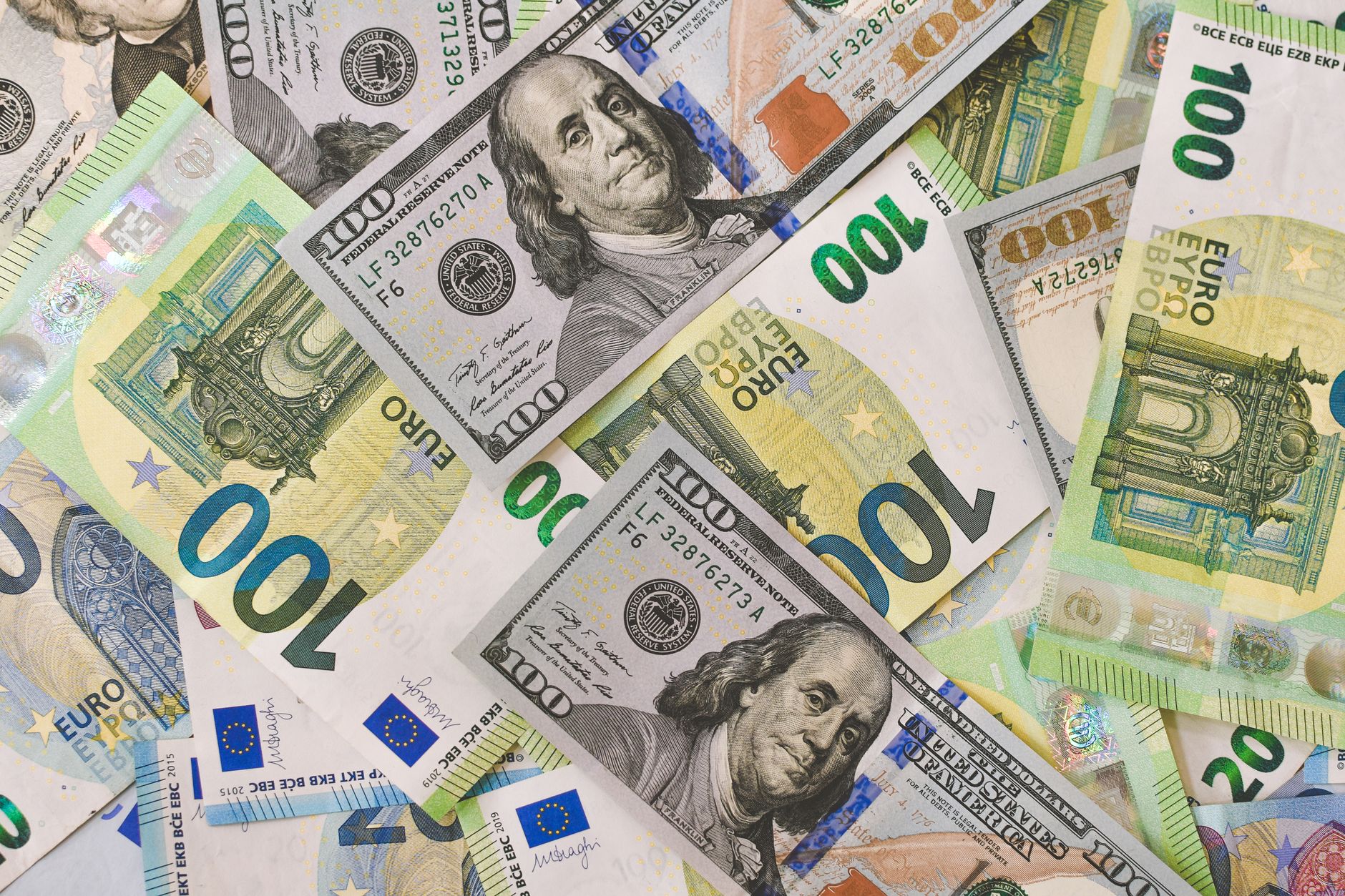
Petra Schmidt, a German retiree living in Frankfurt, watched her savings account yield fall from 3.8% to 2.1% in six months as the European Central Bank cut rates twice, pricing in weakness most policymakers won't openly discuss. The ECB's pivot toward looser policy while the Federal Reserve holds firm at 5.25-5.50% has created a widening interest rate differential that pushes capital toward dollar assets, weakening the euro by 7% against the dollar since September and hollowing out returns for European fixed income investors.
**Key Facts**
• Eurozone GDP expanded 0.2% in Q3 2024, down from 0.3% in Q2; US GDP grew 0.7% in the same period, a 3.5x multiple advantage
• The euro fell to 1.05 against the dollar, a 12-month low, erasing €340 billion in notional value from eurozone equity indices on currency translation alone
• ECB deposit rate now sits at 3.0%, down 150 basis points from the September 2023 peak; Fed funds rate remains at 5.25-5.50%, a 225 basis point spread
• At current pace of ECB easing—one 25bp cut per quarter through 2025—eurozone rates will fall below 2.0% by year-end while US rates hold above 5.0%, widening the spread to 300+ basis points
**Background**
The eurozone economy faces structural headwinds that American policymakers have largely avoided. France's manufacturing PMI contracted to 45.2 in November, Germany's energy costs remain triple pre-pandemic levels, and consumer confidence across the bloc has flatlined while US consumer spending accelerated through the fourth quarter. The ECB, bound by the single currency's geographic reach across 20 nations with vastly different economic trajectories, lacks the political flexibility of the Federal Reserve. When growth weakens across the bloc simultaneously—as it has now—rate cuts become inevitable, even if they harm savers and distort capital allocation. The Fed, by contrast, faces a far more resilient labor market and can afford patience. US unemployment sits at 3.9% with steady wage growth, leaving the Fed no urgency to cut. This creates the conditions for what economists rarely call by its name: a hidden currency war where monetary policy divergence weaponizes exchange rates against one bloc without any central bank explicitly targeting it.
**The Rate Divergence That Reshapes Capital Flows**
The mathematics are remorseless. A US Treasury yielding 4.2% across the 10-year curve offers American investors 220 basis points more than a comparable German Bund at 2.0%. Add currency risk premium—the euro's expected depreciation against a stronger dollar—and the return advantage for moving capital from Frankfurt to New York swells further. German pension funds, which manage €1.9 trillion in assets, have rebalanced into dollar-denominated bonds at rates not seen since 2018. This is not speculation; this is mathematical compulsion.
"The ECB has no choice but to cut rates because the eurozone economy simply cannot support higher real rates," according to Klaus Kastner, chief economist at Vienna-based Central European Economic Institute, in comments to MorrowReport. "But every cut pushes capital out of the eurozone, which weakens the euro, which raises import costs, which pressures inflation and forces even deeper cuts. It is a deflationary spiral disguised as monetary accommodation."
The counter-argument comes from Frankfurt itself. ECB policymakers, including Executive Board member Isabel Schnabel, have pushed back against recession fears, arguing that eurozone inflation at 2.4% year-over-year remains above the 2.0% target and rate cuts are merely returning to neutral policy after a long tightening cycle. By this logic, the rate cuts solve nothing—they simply acknowledge economic reality. But this framing misses the currency dimension entirely. Neutral policy in the eurozone at a 225 basis point disadvantage to the Fed is not neutral; it is capitulation to dollar dominance.
The damage to European asset holders is already measurable. The STOXX Europe 600 index, when calculated in dollars rather than euros, has underperformed US equities by 1,200 basis points over the past 12 months, with currency translation accounting for roughly 40% of that gap. A European investor holding a diversified equity portfolio across both continents has been systematically punished for euro exposure through no fault of stock selection.
**What To Watch: Three Indicators**
First, watch the December 2024 Fed funds futures contract, which is currently pricing a 65% probability of the Fed holding rates steady through the end of this year. If the next CPI report—due January 15, 2025—shows sticky services inflation above 3.5% year-over-year, the market will reprrice this probability upward to 75%+, signaling the Fed sees no need to move and widening the rate spread further. Second, monitor the euro's technical level at 1.02 against the dollar. A breach below that threshold would trigger systematic algorithmic selling from trend-following funds, potentially pushing the euro to 0.98—a level not seen since 2002. Third, track eurozone unemployment, which currently sits at 6.1%. If the next labor market release shows the jobless rate rising above 6.3%, the ECB will likely accelerate its cutting schedule from one cut per quarter to one cut per meeting, potentially signaling panic.
**Will the Federal Reserve Cut Interest Rates in the First Quarter of 2025?**
No. The Fed remains data-dependent and current data does not support cuts. US unemployment at 3.9% remains below the Fed's long-run estimate of 4.0%, wage growth moderated to 3.9% year-over-year in November but still exceeds inflation, and core PCE inflation ticked up to 2.8% from 2.7% in October. Fed Chair Jerome Powell signaled in December that rate cuts are off the table until the Committee sees sustained progress toward the 2.0% inflation target. The next FOMC meeting occurs on January 28-29, 2025, but odds of a cut are below 5% based on current CME FedWatch pricing.
**4 Economic Indicators That Signal Currency Divergence Is Accelerating**
The ECB's composite PMI fell to 49.8 in November versus 54.0 for the US. German industrial orders contracted 2.7% month-over-month. French services inflation accelerated to 3.2% year-over-year. And eurozone M3 money supply growth slowed to 1.9%, approaching stagnation.
Data visualization context
**Frequently Asked Questions**
**Q: Why does the euro's weakness hurt European savers?**
A: When the euro weakens, the purchasing power of euro-denominated savings erodes because imported goods cost more in euros, and eurozone investors who own foreign assets see the euro value of those holdings decline. A German saver holding US dollar bonds sees their euro-equivalent returns compressed by 7% from currency depreciation alone since September.
**Q: Can the ECB stop this currency slide?**
A: Only if it halts rate cuts entirely, but that requires eurozone growth to accelerate—which the data does not support. The ECB faces an impossible choice: keep cutting and watch the euro fall, or hold rates steady and watch unemployment rise.
**Q: How long will this rate divergence last?**
A: Until eurozone growth accelerates or US growth slows. Current consensus forecasts show eurozone GDP at 1.2% for 2025 versus US GDP at 2.1%, suggesting the divergence persists through 2025 and into 2026.