The Federal Reserve left its benchmark rate unchanged at 3.50% to 3.75% following its two-day policy meeting, the first under new Fed Chair Kevin Warsh. Hours later, President Trump signed an interim agreement with Iran that sent oil prices tumbling and reopened the Strait of Hormuz to commercial shipping.
The vote to hold rates was unanimous at 12-0, a sharp reversal from the 8-4 split seen at April's meeting. Nine of 19 Fed officials projected at least one rate increase by the end of 2026, and Warsh dropped the central bank's forward-guidance practice in favor of a data-dependent approach. Warsh, a longtime critic of the Fed's communication habits, cut the post-meeting statement to just 130 words.
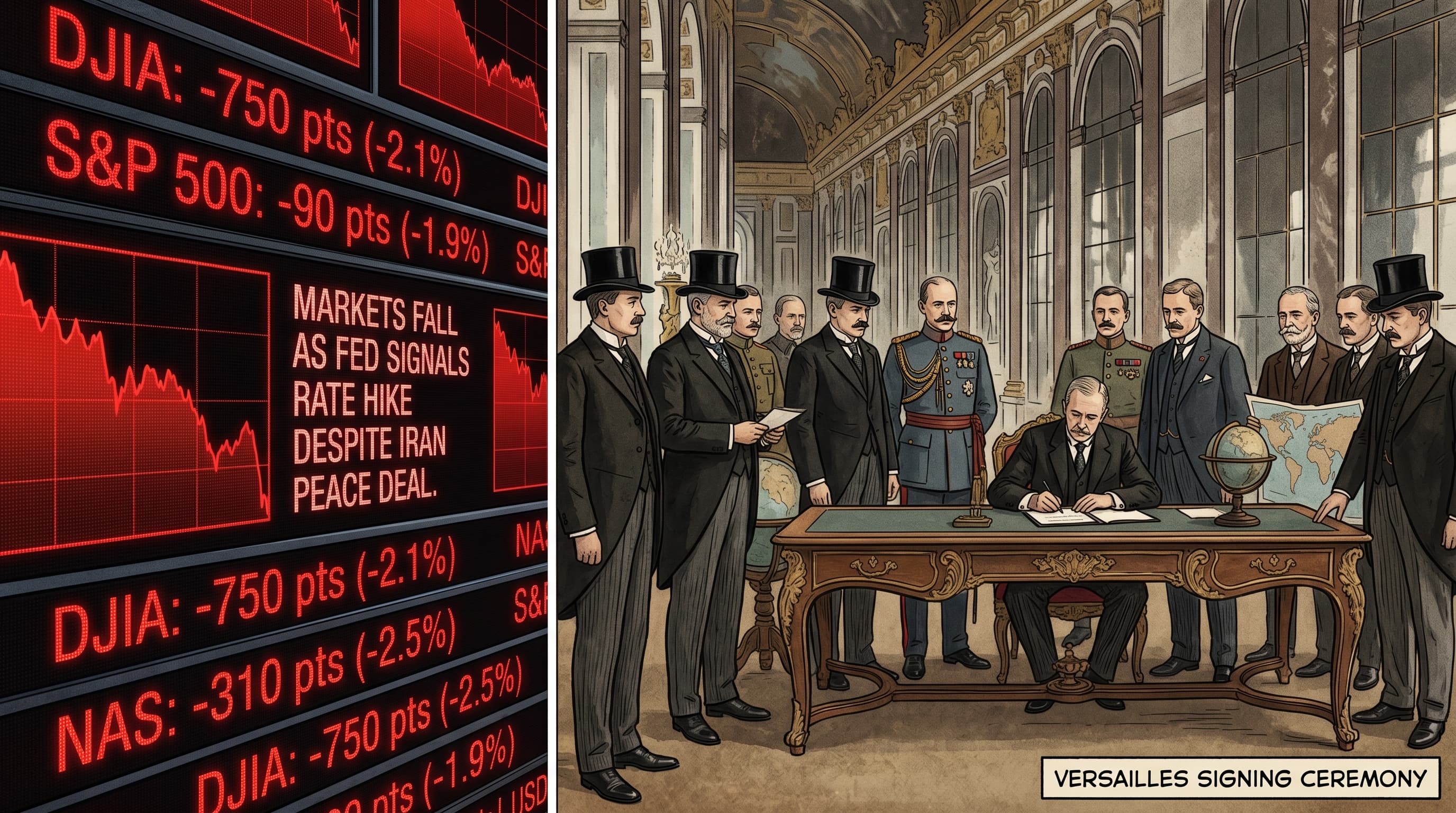
Wall Street sold off hard on the hawkish signal. The Dow Jones fell 507.12 points to close at 51,492.55, the S&P 500 dropped 1.2% to 7,420.10, and the Nasdaq Composite slid 1.3% to 26,021.66. One closely watched markets commentator tracked an intraday swing of roughly $1.2 trillion in S&P 500 value within about two hours of the announcement.
Trump signed the Iran agreement with Iranian President Masoud Pezeshkian at the Palace of Versailles on Wednesday evening. "It's signed," Trump told reporters after a dinner hosted by French President Emmanuel Macron. Three Saudi-flagged tankers carrying six million barrels of crude passed through the Strait of Hormuz within hours of the signing, and oil fell to its lowest level since the conflict began, down roughly 14% over five trading days.